
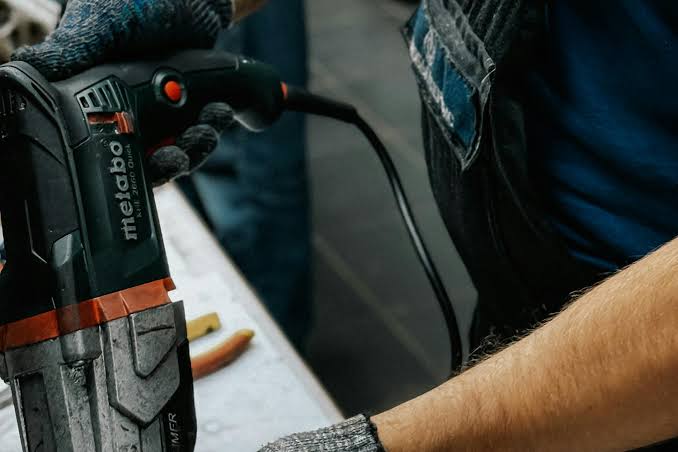
Key Buying Considerations for SDS Drills Used in Heavy-Trade Work
Professional tradespeople working with concrete, stone, and masonry on a daily basis understand how quickly the wrong tool becomes a problem. A drill that cannot handle the physical demands of the job stalls productivity and puts unnecessary wear on both the equipment and the operator. That is why tool selection in this category deserves more than a quick comparison of brand names and price points. The features built into SDS drills—and how those features align with the specific demands of your trade—should drive every purchasing decision.
Why Masonry Work Demands Specialized Drilling Technology
Standard rotary drills transfer rotational force to a bit, which works effectively for wood and metal but struggles against the crystalline structure of concrete and masonry. These materials resist deformation under pure rotational force. Penetrating them efficiently requires a different approach: a rapid succession of impacts combined with rotation that fractures the material grain by grain rather than trying to cut through it continuously.
SDS technology delivers this through an internal hammering mechanism synchronized with the drill’s rotation. The result is a drilling experience that requires far less physical pressure from the operator, produces cleaner holes through hard substrates, and completes the work in a fraction of the time a standard rotary drill would require. For any trade that involves regular work on concrete or masonry, this distinction is fundamental rather than incidental.
How the Tool’s Body Construction Affects Long-Term Reliability
The physical construction of a drilling tool is often given less attention than its performance specifications, but it contributes significantly to how long the tool remains reliable under regular use. Tools subjected to daily use on construction sites encounter vibration, dust, moisture, and physical impact on a routine basis. A well-constructed housing protects the internal components from these conditions.
Metal gear housings generally outperform plastic alternatives in durability and heat dissipation. Tools with well-sealed motor compartments resist dust ingress more effectively than those with open ventilation designs. The quality of the chuck mechanism—how precisely it engages the bit and how well it holds up after repeated tool changes—is another construction detail that becomes apparent over time. These are not always visible from a product listing, which is why handling the tool in person before purchasing, or reviewing long-term feedback from tradespeople who have used it extensively, adds valuable perspective.
The Practical Significance of No-Load Speed Ratings
No-load speed describes how fast the drill’s output shaft rotates when the tool is running without resistance. This figure appears prominently in most product specifications, but its practical relevance depends on context. A higher no-load speed does not always indicate a more capable drill in real masonry applications.
When a drill encounters resistance—as it does the moment the bit contacts concrete—the actual operating speed drops below the no-load figure. What matters in practice is how consistently the tool maintains its speed and hammering action under load. Tools that maintain consistent performance under resistance deliver more reliable results than those with impressive no-load ratings that fall away sharply when actual drilling begins. Reading field reviews from tradespeople who have used the tool under real working conditions provides a clearer picture of this characteristic than specification sheets alone.
Anti-Vibration Systems and Their Importance for Long Shifts
Vibration from power tools is a cumulative health risk. Tradespeople who use heavy drilling equipment for extended periods over many years can develop conditions affecting the hands, wrists, and arms. Regulatory bodies in many countries have established daily vibration exposure limits for workers operating powered hand tools, and responsible contractors take these limits seriously.
Anti-vibration technology built into SDS tools attempts to isolate the operator’s hands from the hammering mechanism using internal damping systems, rubber-mounted handles, or both. While these systems cannot eliminate vibration entirely, they reduce the amount of vibration transmitted to the operator during each hour of use. Over a full career, that reduction carries genuine health significance. Tradespeople who plan to use their tools for many hours per week should treat this feature as an important health consideration rather than an optional comfort upgrade.
Side Handle Versatility and Drilling Position Flexibility
Drilling direction varies considerably depending on the task. Horizontal holes through walls, vertical holes into floors, overhead penetrations through ceilings—each position places different demands on the operator’s posture and grip. A fixed side handle limits how easily the tool can adapt to these positions, while an adjustable or removable side handle gives the operator more flexibility.
Many professional-grade SDS tools allow the side handle to be positioned at multiple angles around the drill’s barrel, or even repositioned forward or back along the tool’s length. This level of adjustability improves control and reduces strain in awkward drilling positions. For tradespeople working regularly in confined spaces or at awkward angles, handle adjustability is a feature that directly affects both safety and productivity.
Corded Versus Cordless: Matching Power Delivery to Site Conditions
The choice between corded and cordless tools in this category involves a practical trade-off. Corded tools deliver consistent power without the weight of a battery pack and are not subject to runtime limitations. They are well suited to fixed workshop settings or job sites with reliable power access.
Cordless tools offer mobility that corded equipment cannot match. Working in locations without accessible power outlets, at heights, or across large sites becomes significantly easier without a cable to manage. Modern battery technology has reduced the gap between corded and cordless performance considerably, and high-capacity battery platforms now support demanding applications for extended run times.
The decision often comes down to where the majority of the work takes place. Tradespeople with access to power on most sites may find corded tools more practical. Those who frequently work in locations without power infrastructure, or who prioritize mobility above all else, will benefit more from a cordless configuration.
Building a Toolkit Around the Right Foundation
The tools a tradesperson relies on daily form the foundation of their professional capability. Choosing an SDS drill that genuinely matches the demands of the work—rather than one that looks capable on a specification sheet—pays dividends in productivity, equipment longevity, and physical health over time. Taking the time to evaluate construction quality, anti-vibration performance, handle versatility, and power delivery format alongside the standard performance figures leads to a purchasing decision that holds up well beyond the first few months on site.
